Thursday, July 2, 2015


Saturday, May 16, 2015
30 Days About Me. Day 26: Favorite Clothing Store
This month I am participating in a
blog challenge. It is 30 Days About Me from the blog a Daily Dose of
Toni.
Today’s topic is favorite clothing
store
Let me first say, and I have said it
all month, that I am the only guy participating in this challenge. That being
said. I love to shop. I have spent enough money at the Mall of America
that I could have put at least one of my kids thru college. Maybe two.
I don’t really have a favorite
clothing store per say. I love REI and L.L. Bean and Cabella’s. But not
necessarily for just clothing but gear for dog sledding and other outdoor
adventures.
My favorite clothing store is not a
store at all but an online retailer. I think they may have one of two locations
but only in Wisconsin.
It is Duluth Trading
Company
They make some of the coolest, most
comfortable work wear on the planet. They even give Carhartt a run for their
money. I wear a pair of Duluth’s overall’s every day in the dog yard. They are
made out of fire-hose material. Yes, the same material. It is extra tough but
very comfortable.
Duluth also has a unique product
called BallRoom Jeans. If you are a guy you know exactly what I am talking
about and it is not a formal dance…

You guys have to understand that up
here in Alaska we dress a bit different than you do. Our wardrobe consists of
Carhartt’s (or Duluth Trading in my case), Alaskan Sneakers
and trapper hats in the winter. I don’t see too many skinny jeans or tank tops
and I have only worn shorts a few times in the year I have lived her.
What is your favorite clothing
store?
Follow my news and updates on Twitter, my whereabouts on
Foursquare and
relationship status on Facebook.
Or send me a telegram.
Thursday, May 14, 2015
30 Days About Me. Day 29: Who has gotten you through the most?
I am participating in a blog challenge this month. It is 30 Days about Me from a Daily Dose of Toni
Today’s topic is Who Has gotten you through the most?
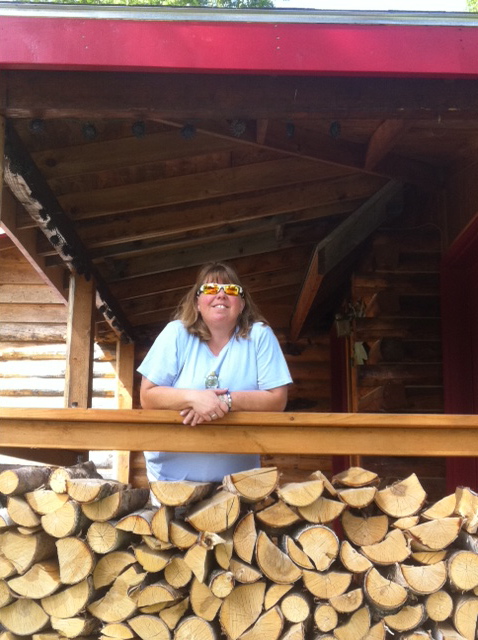
That is simple it is my wife Michele.
Michele is my biggest supporter and my number one fan. She has been by my side during the good times and the bad. She is my constant defender and my biggest advocate. She has allowed me to pursue my dreams and even makes me chicken soup when I am sick.
Follow my news and updates on Twitter, my whereabouts on Foursquare and relationship status on Facebook. Or send me a telegram.
Wednesday, May 13, 2015
30 Days About Me. Day 30: Future Dreams

I am participating in a blog
challenge this month. It is 30 Days about Me from a Daily Dose of
Toni
“You don’t have life if you don’t
have a dream. You have to have something to aim for.” ~Morgan Freeman
This is it folks. The last day of the
challenge. I feel that I know a little bit about the bloggers that have
participated and I want to thank every one of you for sharing. It has been a
great exercise for not only me to get my butt in a chair and write every day
but also learn so many things about other bloggers and what they have going on
in their neck of the woods.
While I know I was the only guy
participating I hope that my posts at least brought a smile every once in a
while with my off-collar sarcastic humor and the way that I think outside the
icebox up here in the Great White North.
I will continue to follow all of your
blogs and continue reading your posts. I hope you will do the same. Thank you
all for your comments over the last month.
It has been fun.
For the topic today it is: a dream
for the future beyond the next year.
That is simple. It can be summed up
in just one sentence
Follow Team Ineka on the trail as we
chase our dream towards Nome!
If there is ever another challenge
let me know, as I would love to participate.
Follow my news and updates on Twitter, my whereabouts on
Foursquare and
relationship status on Facebook.
Or send me a telegram.
Tuesday, May 12, 2015
Sea Kayak Class at UAA

This spring I enrolled in the Beginning Sea Kayaking class. All the outdoor classes are set up in the same way; a couple sessions in the classroom to go over trip planning, introduction to gear, and signing countless forms and waivers. A couple days of practice. In this course we spent two nights in the pool practicing paddling skills and self/team rescues, and then a field trip. We were supposed to go down to Seward to paddle to Caines Head but the weather was bad and we changed our plans at the last minute and went to Kenai Lake for the weekend.
While I had a great time, it was a learning experience. Here is an assignment that I had to submit for the class called 'self appraisal journal'. It is a college class, for a grade, so I did have to some homework! Here are some photos of our trip:
Self-Appraisal Journal This past weekend was an eye opening experience for me. Going into the class I thought I was very comfortable on the water, with spending many trips on the white water in Colorado kayaking. But what I soon realized is it has been more than 12 years since I have been in a kayak and it took some getting used to again. During the pool sessions it was obvious that age is catching up to me and I was not the spry young man that I used to be. That is disheartening.
Spending hours and days out on the trail mushing dogs, I am totally comfortable in that environment. When I entered the pool I suddenly felt like the proverbial fish out of the water. I was comfortable with my swimming skills, both with the PFD and without and felt no discomfort in the deep water and even playing the polo game. I felt comfortable with the paddle work in the pool in both the single and double boats. Where things started to go badly was when I attempted a self-rescue. I just could not get up in the boat. This became extremely frustrating to me and I started to push myself too hard trying to get into the boat and knocked a front tooth loose on the boat. I vowed at that point that I would do everything in my power not to flip the boat on the trip.
I did however feel comfortable on the assisted rescues and felt confident I could both rescue myself and come to aid of my fellow travelers if needed. The first day on the water at the lake was extremely frustrating. Less than half way in the foot peg straps came loose and I did not have a good way to steer the long double boat heading into the wind with Gabby up front. In hindsight, we did not work well together as a team and I was unsure what to do in the back of the boat with my teammate up front. When we decided to pull onto shore and adjust the foot pegs it was much better steering the boat and I became much more confident in our abilities. The hike was a great experience. Again this is my element. I feel totally comfortable walking any distance and can keep up with the pack of travel partners with no problem. The only issue I had was wearing the wrong footwear. Only having soggy Bogg boots, rather than hiking boots. The second day on the water was a much better experience and
I really enjoyed the time out. Sam and I worked well together with the only issue being mis-strokes of the two paddlers. It took a bit of getting used to in keep the cadence of my paddle partner and also controlling the rudder. I mentioned to Sam it was a bit like learning how to drive a stick shift again. I told myself at the end of day one of paddling that I was going to “master” the double boat before attempting a single. I think I am comfortable in saying that I did that, at least in the conditions that we were faced.
I thought the second day on the water was a cool experience. I loved seeing the bald eagles on the cliffs and paddling in the rain and wind. I thought it was cool to see the snow slide. I had never seen one of those before. What I felt most uncomfortable with was staying in camp itself. Driving back, admittedly I began to second-guess my degree path. I felt extremely out of place with a group of campers that were my kids age. I am not sure how to best move forward as I know that I will be spending a lot of time outdoors with people much younger than I. My natural inclination is to become more of a teacher to these young students versus a student myself.
Overall the experience was a decent one. At the end of the weekend I feel learned a few things and I am at least capable of handling myself in a sea kayak. I am not sure if I am ready for a solo expedition but I am comfortable enough to do it again.
Skills Journal
I will rate myself on a scale of one to five on some of the skills that we learned on the water in the pool and on the lake.
Lest Proficient 3. Average Proficient 5. Proficient
Safety: 5 Risk management and hazards: 4 Equipment and selection: 4 Trip planning: 4 Transporting kayak: 4 Preparing to paddle: 3 Boat handling: Day 1---2, Day 2—4 Basic strokes: Day 1---2, Day 2—4 Safety skills: Pool---2, Lake---3 Environmental impact: 5
Follow on Twitter @robertforto Search for the hashtag #midlifeincollege on Facebook, Twitter and Instagram
Saturday, October 9, 2010
The Future Home of Iditarod Dreams: Outhouses and Wanderlust
The Future Home of Iditarod Dreams: Outhouses and Wanderlust
Some people sing in the shower. I, on the other hand, tend to think... I know, I know. But hey, what better place to work out the problems of the day or just ask why (?) about things that come up in that gray matter upstairs.
The thought that came to mind today is how in the world, in the civilized world of the Mat-Su Valley, just an hour north of Anchorage, do people get by without indoor plumbing and have to resort to the use of an outhouse?
In the hamlet, city, village, or whatever it is called, of Houston, Alaska--just about nine miles south of here, 40% of the population still uses outhouses and haul water. That is still amazing to me.
It is 2010 and people still handle their business outdoors? I have heard stories of outhouses since my arrival here and some are works of art. In fact, my friend built one for his wife (just because) and it is equipped with the latest Cabela’s catalog and a Costco sized bottle of hand sanitizer (Did you know that Dr. Laura reported that junk only lasts for 6 seconds in its vigilant fight of the germies).
Another friend, Dave, told me a story about how he used to carry the toilet seat inside on in the blizzard cold of an Alaskan winter so his tush didn't freeze to it.
We even have two outhouses on our property, but thankfully we have plenty of water and indoor plumbing.
I remember when Michele and I started looking at property up here almost a decade ago that indoor plumbing was a must (the kids were very young then). I recall one awesome property that was a castle by musher’s standards that was advertised in Mushing magazine, I believe, did not have a “throne”.
Now, I was a Boy Scout and I love those commercials for Charmin. I could handle myself in the woods if I needed to but what I could not do is not take a hot shower.
I am one of those guys, call it my Diva moment, that has to take a looonngg, hot shower every single day. I sometimes run out of hot water on occasions.
How do these people take showers? Much less a bath? It is not the wild west anymore where you heat up water on the stove and soak in the tub? Or do you?
Maybe you use one of those shower in a bag thingys?
How do you guys do it? The 40% of you of the booming populous of Houston and surrounding areas? Inquiring minds want to know...
I welcome your comments and suggestions. Please comment below.
Robert Forto | Team Ineka | Alaska Dog Works | Mushing Radio | Dog Doctor Radio | Denver Dog Works
___________________
Dr. Robert Forto is a musher training for his first Iditarod under the Team Ineka banner and the host of the popular radio shows, Mush! You Huskies and The Dog Doctor Radio Show
Some people sing in the shower. I, on the other hand, tend to think... I know, I know. But hey, what better place to work out the problems of the day or just ask why (?) about things that come up in that gray matter upstairs.
The thought that came to mind today is how in the world, in the civilized world of the Mat-Su Valley, just an hour north of Anchorage, do people get by without indoor plumbing and have to resort to the use of an outhouse?
In the hamlet, city, village, or whatever it is called, of Houston, Alaska--just about nine miles south of here, 40% of the population still uses outhouses and haul water. That is still amazing to me.
It is 2010 and people still handle their business outdoors? I have heard stories of outhouses since my arrival here and some are works of art. In fact, my friend built one for his wife (just because) and it is equipped with the latest Cabela’s catalog and a Costco sized bottle of hand sanitizer (Did you know that Dr. Laura reported that junk only lasts for 6 seconds in its vigilant fight of the germies).
Another friend, Dave, told me a story about how he used to carry the toilet seat inside on in the blizzard cold of an Alaskan winter so his tush didn't freeze to it.
We even have two outhouses on our property, but thankfully we have plenty of water and indoor plumbing.
I remember when Michele and I started looking at property up here almost a decade ago that indoor plumbing was a must (the kids were very young then). I recall one awesome property that was a castle by musher’s standards that was advertised in Mushing magazine, I believe, did not have a “throne”.
Now, I was a Boy Scout and I love those commercials for Charmin. I could handle myself in the woods if I needed to but what I could not do is not take a hot shower.
I am one of those guys, call it my Diva moment, that has to take a looonngg, hot shower every single day. I sometimes run out of hot water on occasions.
How do these people take showers? Much less a bath? It is not the wild west anymore where you heat up water on the stove and soak in the tub? Or do you?
Maybe you use one of those shower in a bag thingys?
How do you guys do it? The 40% of you of the booming populous of Houston and surrounding areas? Inquiring minds want to know...
I welcome your comments and suggestions. Please comment below.
Robert Forto | Team Ineka | Alaska Dog Works | Mushing Radio | Dog Doctor Radio | Denver Dog Works
___________________
Dr. Robert Forto is a musher training for his first Iditarod under the Team Ineka banner and the host of the popular radio shows, Mush! You Huskies and The Dog Doctor Radio Show
Tuesday, September 28, 2010
Sleeping Under the Same Big Sky
The Future Home of Iditarod Dreams: Sleeping Under the Same Big Sky
The other day my wife sent me a little song lyric on Facebook from a Disney movie: An American Tail. It is about a little mouse named Fievel that goes out on his own to experience an adventure but is forced to leave his family behind. Kinda sounds like what I am doing.
I will admit that this is the hardest thing I have ever done--being apart from those that I care about. They depend on me and I depend on them. They are my strength. Somehow we will get through this, I know, but until then I will sing this song...
Somewhere Out There
Somewhere out there,
beneath the pale moonlight,
someone’s thinking of me and loving me tonight.
Somewhere out there,
someone’s saying a prayer,
that we’ll find one another in that big somewhere out there.
And even though I know how far apart we are,
it helps to think we might be wishing under the same bright star.
And when the night wind begins to sing a lonesome lullaby,
it helps to thing we’re sleeping under the same big sky.
Somewhere out there,
if love can see us through,
then we’ll be together, somewhere out there,
out where our dreams come true.
http://www.stlyrics.com/lyrics/anamericantail/somewhereoutthere.htm
I welcome your comments and suggestions. Please comment below.
Robert Forto | Team Ineka | Alaska Dog Works | Mushing Radio | Dog Doctor Radio | Denver Dog Works
___________________
Dr. Robert Forto is a musher training for his first Iditarod under the Team Ineka banner and the host of the popular radio shows, Mush! You Huskies and The Dog Doctor Radio Show
The other day my wife sent me a little song lyric on Facebook from a Disney movie: An American Tail. It is about a little mouse named Fievel that goes out on his own to experience an adventure but is forced to leave his family behind. Kinda sounds like what I am doing.
I will admit that this is the hardest thing I have ever done--being apart from those that I care about. They depend on me and I depend on them. They are my strength. Somehow we will get through this, I know, but until then I will sing this song...
Somewhere Out There
Somewhere out there,
beneath the pale moonlight,
someone’s thinking of me and loving me tonight.
Somewhere out there,
someone’s saying a prayer,
that we’ll find one another in that big somewhere out there.
And even though I know how far apart we are,
it helps to think we might be wishing under the same bright star.
And when the night wind begins to sing a lonesome lullaby,
it helps to thing we’re sleeping under the same big sky.
Somewhere out there,
if love can see us through,
then we’ll be together, somewhere out there,
out where our dreams come true.
http://www.stlyrics.com/lyrics/anamericantail/somewhereoutthere.htm
I welcome your comments and suggestions. Please comment below.
Robert Forto | Team Ineka | Alaska Dog Works | Mushing Radio | Dog Doctor Radio | Denver Dog Works
___________________
Dr. Robert Forto is a musher training for his first Iditarod under the Team Ineka banner and the host of the popular radio shows, Mush! You Huskies and The Dog Doctor Radio Show
Wednesday, September 22, 2010
New Rules for Service Animals and the ADA
New Rules for Service Animals and the ADA
The Department of Justice is muddying the waters of the disabled and the use of service animals in the new definitions for what a service animal must be. In the past people have used animals of all types. Everything from a gerbil to a donkey for a wide range of disabilities including mobility, psychiatric, seizure alert, diabetic and hearing dogs.
Americans with Disabilities Act (ADA)
New Service Animal definition injures the disabled
Our current definition for service animal under the ADA is, "Service animal means any guide dog, signal dog, *or other animal* individually trained to do work or perform tasks for the benefit of an individual with a disability, including, but not limited to, guiding individuals with impaired vision, alerting individuals with impaired hearing to intruders or sounds, providing minimal protection or rescue work, pulling a wheelchair, or fetching dropped items."
The new definition is, "Service animal means any *dog* that is individually trained to do work or perform tasks for the benefit of an individual with a disability, including a physical, sensory, psychiatric, intellectual, or other mental disability. Other species of animals, whether wild or domestic, trained or untrained, are not service animals for the purposes of this definition. The work or tasks performed by a service animal must be directly related to the handler's disability. Examples of work or tasks include, but are not limited to, assisting individuals who are blind or have low vision with navigation and other tasks, alerting individuals who are deaf or hard of hearing to the presence of people or sounds, providing non-violent protection or rescue work, pulling a wheelchair, assisting an individual during a seizure, alerting individuals to the presence of allergens, retrieving items such as medicine or the telephone, providing physical support and assistance with balance and stability to individuals with mobility disabilities, and helping persons with psychiatric and neurological disabilities by preventing or interrupting impulsive or destructive behaviors. The crime deterrent effects of an animal's presence and the provision of emotional support, well-being, comfort, or companionship do not constitute work or tasks for the purposes of this definition."
I, for one, agree with the definition that service animals should just be DOGS. I would love to have your thoughts on the subject as I am sure there are many opinions out there.
I welcome your comments and concerns. Please comment below.
Robert Forto | Team Ineka | Alaska Dog Works | Mushing Radio | Dog Doctor Radio | Denver Dog Works
___________________
Dr. Robert Forto the training director for Dog Works Training Centers, is a musher training for his first Iditarod under the Team Ineka banner and the host of the popular radio shows, Mush! You Huskies and The Dog Doctor Radio Show
The Department of Justice is muddying the waters of the disabled and the use of service animals in the new definitions for what a service animal must be. In the past people have used animals of all types. Everything from a gerbil to a donkey for a wide range of disabilities including mobility, psychiatric, seizure alert, diabetic and hearing dogs.
Americans with Disabilities Act (ADA)
New Service Animal definition injures the disabled
Our current definition for service animal under the ADA is, "Service animal means any guide dog, signal dog, *or other animal* individually trained to do work or perform tasks for the benefit of an individual with a disability, including, but not limited to, guiding individuals with impaired vision, alerting individuals with impaired hearing to intruders or sounds, providing minimal protection or rescue work, pulling a wheelchair, or fetching dropped items."
The new definition is, "Service animal means any *dog* that is individually trained to do work or perform tasks for the benefit of an individual with a disability, including a physical, sensory, psychiatric, intellectual, or other mental disability. Other species of animals, whether wild or domestic, trained or untrained, are not service animals for the purposes of this definition. The work or tasks performed by a service animal must be directly related to the handler's disability. Examples of work or tasks include, but are not limited to, assisting individuals who are blind or have low vision with navigation and other tasks, alerting individuals who are deaf or hard of hearing to the presence of people or sounds, providing non-violent protection or rescue work, pulling a wheelchair, assisting an individual during a seizure, alerting individuals to the presence of allergens, retrieving items such as medicine or the telephone, providing physical support and assistance with balance and stability to individuals with mobility disabilities, and helping persons with psychiatric and neurological disabilities by preventing or interrupting impulsive or destructive behaviors. The crime deterrent effects of an animal's presence and the provision of emotional support, well-being, comfort, or companionship do not constitute work or tasks for the purposes of this definition."
I, for one, agree with the definition that service animals should just be DOGS. I would love to have your thoughts on the subject as I am sure there are many opinions out there.
I welcome your comments and concerns. Please comment below.
Robert Forto | Team Ineka | Alaska Dog Works | Mushing Radio | Dog Doctor Radio | Denver Dog Works
___________________
Dr. Robert Forto the training director for Dog Works Training Centers, is a musher training for his first Iditarod under the Team Ineka banner and the host of the popular radio shows, Mush! You Huskies and The Dog Doctor Radio Show
Sunday, July 11, 2010
The Future Home of Iditarod Dreams Part 2
The Future of Iditarod Dreams Part 2
If you got a chance to listen to the latest episode of the Mush! You Huskies Radio show you will know by now that the future home of the Team Ineka mushing kennel will be in Willow, Alaska.
Listen to the show here: Team Ineka in Alaska
After almost six months of traveling across North America, searching out suitable properties in Minnesota (twice), California and Alaska, we have settled on the Alaska property. While we would have loved to stay here in the Lower-48 states, it was just not possible. The Minnesota kennels were either too expensive or the county would not allow us to have a sled dog kennel. The California property was very nice but you had to drive well over an hour to run dogs and it was just too hot!
The Willow property is not a mansion by any stretch of imagination. It is a true musher’s property but it does have running water, electricity and full speed internet. There is an outhouse on the four acres “just in case”.
It is every mushers dream of finding a place in Alaska, and many of us have hopes of running the Iditarod one day. Team Ineka is one step closer now with the purchase of this property.
There are many things that are appealing about this place but a couple to note are: 1. dogs are allowed and we will not need special permission from the county or our neighbors. In fact there are several mushers in the neighborhood. 2. There are already kennel runs on the property. They need repair but they are there. 3. You can run dogs right from your property. I can literally hook up my team and go with a trail-head leading right up to the kennel.
Our goal is to spend six months a year in Alaska and six months in Colorado. We will maintain our business, Denver Dog Works here and it will remain fully operational with our third partner taking over the day to day tasks in about a year. We love Colorado but this is a place that we could not pass up.
My goal is to run the Iditarod in 2013. I will begin building my team immediately after my arrival in Alaska and start to run races starting this winter. By 2012 I will be running my qualifiers for the Iditarod and enter the race the following year.
While I have thought about this dream since the day I purchased my first Siberian Husky in the fall of 1987, it will take a tremendous amount of work to make this dream a reality but this is the first step to make it happen.
________________
Dr. Robert Forto is the Dog Sledding Examiner, a musher training for his first Iditarod under the Team Ineka banner and the host of the Mush! You Huskies Radio show.
If you got a chance to listen to the latest episode of the Mush! You Huskies Radio show you will know by now that the future home of the Team Ineka mushing kennel will be in Willow, Alaska.
Listen to the show here: Team Ineka in Alaska
After almost six months of traveling across North America, searching out suitable properties in Minnesota (twice), California and Alaska, we have settled on the Alaska property. While we would have loved to stay here in the Lower-48 states, it was just not possible. The Minnesota kennels were either too expensive or the county would not allow us to have a sled dog kennel. The California property was very nice but you had to drive well over an hour to run dogs and it was just too hot!
The Willow property is not a mansion by any stretch of imagination. It is a true musher’s property but it does have running water, electricity and full speed internet. There is an outhouse on the four acres “just in case”.
It is every mushers dream of finding a place in Alaska, and many of us have hopes of running the Iditarod one day. Team Ineka is one step closer now with the purchase of this property.
There are many things that are appealing about this place but a couple to note are: 1. dogs are allowed and we will not need special permission from the county or our neighbors. In fact there are several mushers in the neighborhood. 2. There are already kennel runs on the property. They need repair but they are there. 3. You can run dogs right from your property. I can literally hook up my team and go with a trail-head leading right up to the kennel.
Our goal is to spend six months a year in Alaska and six months in Colorado. We will maintain our business, Denver Dog Works here and it will remain fully operational with our third partner taking over the day to day tasks in about a year. We love Colorado but this is a place that we could not pass up.
My goal is to run the Iditarod in 2013. I will begin building my team immediately after my arrival in Alaska and start to run races starting this winter. By 2012 I will be running my qualifiers for the Iditarod and enter the race the following year.
While I have thought about this dream since the day I purchased my first Siberian Husky in the fall of 1987, it will take a tremendous amount of work to make this dream a reality but this is the first step to make it happen.
________________
Dr. Robert Forto is the Dog Sledding Examiner, a musher training for his first Iditarod under the Team Ineka banner and the host of the Mush! You Huskies Radio show.
Friday, July 9, 2010
Every Dog Has Its Day-Part 4
Every Dog Has Its Day- Part 4
“Every dog has its day dog, when the big dog throws him a bone. One moment in the sunshine, when your ducks line up in a row.” – Toby Keith
Toby has been very busy. He has been training with several other dogs in group classes and has gone on several field trips with his friend Alaric.
Toby and his handler are continuing to work together weekly and our progressing through their training very well. They are fast becoming a great team. Tomorrow Toby and his handler will be featured in the Denver Post YourHub.com and featured as a story about persevering, strength, and courage.
You can read the story here: Coping with a Little Canine Help
As you might recall when I met Toby his handler had rescued him from the Denver Dumb Friends League and do to her illness returned him just a month later on the same day I was too meet them. I was able to get her to go back and get Toby and upon my evaluation I discovered that temperamentally he was one of the soundest puppies I’d ever tested, so his training began immediately. Toby has been in training now for 5 weeks and has at least 7 weeks of intensive training to do with me at Denver Dog Works before he is sent to be with his handler permanently. When this occurs Toby and Shauna will begin their Canine Good Citizen Training and public training.
In the upcoming weeks Toby will be visiting several new places; the mall, grocery store, hardware store, park and vet office. Toby is also in Canine Good Citizen classes and is doing quite well being that he is the youngest in the class.
As a psychiatric service dog Toby will be expected to comfort, provide a safe environment, retrieve medications, and provide his handler with unconditional love and support in times of need. Toby is already performing his duties as a service dog and will continue to perfect his job over the next several months.
If you would like to help Shauna with the costs of training please contact us at Denver Dog Works
Tags: Canine Training Denver | Dog Training Denver | Michele Forto | Psychiatric Service Dogs
______________
Michele Forto is the Denver Dog Training Examiner, a certified canine trainer at Denver Dog Works and the co-host of the Dog Doctor Radio Show
“Every dog has its day dog, when the big dog throws him a bone. One moment in the sunshine, when your ducks line up in a row.” – Toby Keith
Toby has been very busy. He has been training with several other dogs in group classes and has gone on several field trips with his friend Alaric.
Toby and his handler are continuing to work together weekly and our progressing through their training very well. They are fast becoming a great team. Tomorrow Toby and his handler will be featured in the Denver Post YourHub.com and featured as a story about persevering, strength, and courage.
You can read the story here: Coping with a Little Canine Help
As you might recall when I met Toby his handler had rescued him from the Denver Dumb Friends League and do to her illness returned him just a month later on the same day I was too meet them. I was able to get her to go back and get Toby and upon my evaluation I discovered that temperamentally he was one of the soundest puppies I’d ever tested, so his training began immediately. Toby has been in training now for 5 weeks and has at least 7 weeks of intensive training to do with me at Denver Dog Works before he is sent to be with his handler permanently. When this occurs Toby and Shauna will begin their Canine Good Citizen Training and public training.
In the upcoming weeks Toby will be visiting several new places; the mall, grocery store, hardware store, park and vet office. Toby is also in Canine Good Citizen classes and is doing quite well being that he is the youngest in the class.
As a psychiatric service dog Toby will be expected to comfort, provide a safe environment, retrieve medications, and provide his handler with unconditional love and support in times of need. Toby is already performing his duties as a service dog and will continue to perfect his job over the next several months.
If you would like to help Shauna with the costs of training please contact us at Denver Dog Works
Tags: Canine Training Denver | Dog Training Denver | Michele Forto | Psychiatric Service Dogs
______________
Michele Forto is the Denver Dog Training Examiner, a certified canine trainer at Denver Dog Works and the co-host of the Dog Doctor Radio Show
Thursday, July 8, 2010
Dog Training in Denver
Dog Training in Denver
Are you looking for a great place to take your dog on a hike that’s not too far from the city but will still give your dog a chance to feel like he’s off the beaten path?
Beaver Brook Trail is a great trail for you and your dog. The Beaver Brook Trail is a strenuous, 3.6 mile hike on the south rim of Clear Creek Canyon Denver that will take about 3 hours to complete.
A few tips for hiking with your dog:
Hydrate your dog prior to the hike and often during the hike
Check your dog’s pads; terrain can affect a dog’s pads especially when they aren’t used to rocks, gravel, dirt, or even asphalt. You can use booties or simply give them a “bagbalm” treatment
If your dog has lots of energy; outfit him with a doggie pack and he can pack in his own water, poop bags, first aid, and snack
Take a few rest periods along the trail if you and your dog are new to hiking
Pack a Snack!
Be respectful of others on the trail – pack your leash and follow all leashing and curbing laws
Leave No Trace!
Remember that Denver is a mile high and if you are new to the area this can affect both you and your dog. Check with your veterinarian to be sure your dog is healthy enough for strenuous exercise and if not, build up to this trail as its one of the best ones to enjoy with your dog.
____________
Michele Forto is the Denver Dog Training Examiner, a certified canine trainer at Denver Dog Works and the co-host of the Dog Doctor Radio Show
Are you looking for a great place to take your dog on a hike that’s not too far from the city but will still give your dog a chance to feel like he’s off the beaten path?
Beaver Brook Trail is a great trail for you and your dog. The Beaver Brook Trail is a strenuous, 3.6 mile hike on the south rim of Clear Creek Canyon Denver that will take about 3 hours to complete.
A few tips for hiking with your dog:
Hydrate your dog prior to the hike and often during the hike
Check your dog’s pads; terrain can affect a dog’s pads especially when they aren’t used to rocks, gravel, dirt, or even asphalt. You can use booties or simply give them a “bagbalm” treatment
If your dog has lots of energy; outfit him with a doggie pack and he can pack in his own water, poop bags, first aid, and snack
Take a few rest periods along the trail if you and your dog are new to hiking
Pack a Snack!
Be respectful of others on the trail – pack your leash and follow all leashing and curbing laws
Leave No Trace!
Remember that Denver is a mile high and if you are new to the area this can affect both you and your dog. Check with your veterinarian to be sure your dog is healthy enough for strenuous exercise and if not, build up to this trail as its one of the best ones to enjoy with your dog.
____________
Michele Forto is the Denver Dog Training Examiner, a certified canine trainer at Denver Dog Works and the co-host of the Dog Doctor Radio Show
Wednesday, July 7, 2010
The Future Home of Iditarod Dreams Part 1
The Future Home of Iditarod Dreams Part 1
"It's your sled and your team don't let go of the sled"
-Chris Fuller
I'm writing this at 34,000 feet on my iPad on a flight heading to California to meet a new friend and to run dogs in the Sierra nevada mountains.
It has been years since I have been on the back of a dog sled. I have thought about this moment for just as long. Early in this new millennium, my wife, Michele got an opportunity to take a job in Denver, Colorado. She said you can come if you want but I am going. That changed my dog sledding plans and my training for the Iditarod in 2003.
In 2006 Michele was fed up with her job in denver as a paralegal at a large Denver law firm and wanted to join me at our new business at Denver Dog Works. I remember telling her the day she wanted to quit her job, "I won't tell you to quit or not, it's your decision, but just so you know, please don't blame me if you don't like it," I said.
Let's fast track to May of 2009. Our business, Denver Dog Works has survived well and we are making a name for ourselves in Denver and building a pretty nice life for our family, but that Iditarod dream just wouldn't go away. I started talking to people on Facebook and one person I be-friended was Iditarod veteran Hugh Neff. We got to talking and soon I asked him if he would like to come out to Colorado and speak at my daughter's school on his upcoming tour in the fall. He accepted and we started making plans.
Hugh visited Prairie Middle School in September and he and I had breakfast afterwards and just "talked dogs". I had mentioned that I wanted to run the Iditarod and my plans were to do it in 2013. He said, "get in shape and come to Alaska."
In January of 2010 I was privileged to connect with Chris Fuller a public speaker, business coach and author of the book Iditarod Leadership. Chris was hosting a conference in Anchorage to correspond with the start of the Iditarod. I accepted his invitation to attend and made plans to be in Anchorage for the Iditarod start the first Saturday in March. Soon after I booked my flight I contacted Hugh and said I would be there.
I arrived in Anchorage on a red eye Wednesday night before the ceremonial start on Saturday and attended Chris' conference. It was awesome! That evening was the mushers banquet and got to meet a lot the mushers and new friends.
On Friday I met Hugh in Wasilla and he introduced me to his team and offered me a handlers pass for Saturdays start on Fourth Street. Hugh was staying at a friend of his, Dave Sheer, a veteran musher and realtor. I said as I was leaving, "let me get your number, I might be looking for a place up here soon." those words changed my life forever.
The ceremonial start was everything I expected. I helped Hugh and his team get started and learned a lot about race preparations.
I had a red eye flight to catch on Saturday night so I wasn't able to go to Willow for the official start on Sunday but that was okay.
I arrived back in Denver full of enthusiasm and motivation. Michele and I talked about it and decided it was time to get back into racing. Within three weeks I was looking at a property in Minnesota that showed promise but the county wouldn't allow a sled dog kennel.
I decided to call Dave. I had lost his number so I sent a message to Hugh. He said, "he's on Facebook."
I sent Dave a message asking if he remembered me and he said, "of course... What's on your mind?"
Within a few days we found a home for sale and I made plans to go up to alaska to see it. On July 3rd, my daughter and I will be heading up for another quick trip. This time to take the next step in our journey.
To be continued...
_________________
Dr. Robert Forto is the dog sledding examiner, a musher training for his first Iditarod in 2013 under the Team Ineka banner and the host of the Dog Doctor Radio Show.
"It's your sled and your team don't let go of the sled"
-Chris Fuller
I'm writing this at 34,000 feet on my iPad on a flight heading to California to meet a new friend and to run dogs in the Sierra nevada mountains.
It has been years since I have been on the back of a dog sled. I have thought about this moment for just as long. Early in this new millennium, my wife, Michele got an opportunity to take a job in Denver, Colorado. She said you can come if you want but I am going. That changed my dog sledding plans and my training for the Iditarod in 2003.
In 2006 Michele was fed up with her job in denver as a paralegal at a large Denver law firm and wanted to join me at our new business at Denver Dog Works. I remember telling her the day she wanted to quit her job, "I won't tell you to quit or not, it's your decision, but just so you know, please don't blame me if you don't like it," I said.
Let's fast track to May of 2009. Our business, Denver Dog Works has survived well and we are making a name for ourselves in Denver and building a pretty nice life for our family, but that Iditarod dream just wouldn't go away. I started talking to people on Facebook and one person I be-friended was Iditarod veteran Hugh Neff. We got to talking and soon I asked him if he would like to come out to Colorado and speak at my daughter's school on his upcoming tour in the fall. He accepted and we started making plans.
Hugh visited Prairie Middle School in September and he and I had breakfast afterwards and just "talked dogs". I had mentioned that I wanted to run the Iditarod and my plans were to do it in 2013. He said, "get in shape and come to Alaska."
In January of 2010 I was privileged to connect with Chris Fuller a public speaker, business coach and author of the book Iditarod Leadership. Chris was hosting a conference in Anchorage to correspond with the start of the Iditarod. I accepted his invitation to attend and made plans to be in Anchorage for the Iditarod start the first Saturday in March. Soon after I booked my flight I contacted Hugh and said I would be there.
I arrived in Anchorage on a red eye Wednesday night before the ceremonial start on Saturday and attended Chris' conference. It was awesome! That evening was the mushers banquet and got to meet a lot the mushers and new friends.
On Friday I met Hugh in Wasilla and he introduced me to his team and offered me a handlers pass for Saturdays start on Fourth Street. Hugh was staying at a friend of his, Dave Sheer, a veteran musher and realtor. I said as I was leaving, "let me get your number, I might be looking for a place up here soon." those words changed my life forever.
The ceremonial start was everything I expected. I helped Hugh and his team get started and learned a lot about race preparations.
I had a red eye flight to catch on Saturday night so I wasn't able to go to Willow for the official start on Sunday but that was okay.
I arrived back in Denver full of enthusiasm and motivation. Michele and I talked about it and decided it was time to get back into racing. Within three weeks I was looking at a property in Minnesota that showed promise but the county wouldn't allow a sled dog kennel.
I decided to call Dave. I had lost his number so I sent a message to Hugh. He said, "he's on Facebook."
I sent Dave a message asking if he remembered me and he said, "of course... What's on your mind?"
Within a few days we found a home for sale and I made plans to go up to alaska to see it. On July 3rd, my daughter and I will be heading up for another quick trip. This time to take the next step in our journey.
To be continued...
_________________
Dr. Robert Forto is the dog sledding examiner, a musher training for his first Iditarod in 2013 under the Team Ineka banner and the host of the Dog Doctor Radio Show.
Tuesday, June 15, 2010
Training Your Dog is a Nationwide Phenomenon
Training Your Dog is a Nationwide Phenomenon
Training with your dog has become a nationwide phenomenon. The dog training industry has doubled in size in the past decade. Just look at Denver, Colorado. Ten years ago, dog day cares began to sprout up around the city as well as dog parks. Twenty years ago, no one would have imagined a day care for doggies being a lucrative business venture.
Today more than ever people take better care of their pets, extending the lives of their pets and enriching their own lives. Training isn’t just about teaching your dog obedience any more. Training is as much an activity for pet parents as soccer is on Saturday afternoons for human parents.
In Denver, I have watched the industry of dog training and dog related businesses boom. There are over 200 dog trainers in the Denver metro area alone giving us the most choices per capita for dog trainers. The industry is highly competitive and so is the pricing and the types of training being offered.
Read more about Nationwide Training
Dog training definitely is a trend. Training with your dog enhances your relationship, builds trust, and strengthens our bond with canines. There are several styles of training and trainers to choose from. Do your research and become familiar with the types of training styles available to best determine the style of training that will work best for you.
_____________________
Michele Forto is Denvers Dog Training Examiner, a certified canine trainer at Denver Dog Works and the co-host of the Dog Doctor Radio Show
Training with your dog has become a nationwide phenomenon. The dog training industry has doubled in size in the past decade. Just look at Denver, Colorado. Ten years ago, dog day cares began to sprout up around the city as well as dog parks. Twenty years ago, no one would have imagined a day care for doggies being a lucrative business venture.
Today more than ever people take better care of their pets, extending the lives of their pets and enriching their own lives. Training isn’t just about teaching your dog obedience any more. Training is as much an activity for pet parents as soccer is on Saturday afternoons for human parents.
In Denver, I have watched the industry of dog training and dog related businesses boom. There are over 200 dog trainers in the Denver metro area alone giving us the most choices per capita for dog trainers. The industry is highly competitive and so is the pricing and the types of training being offered.
Read more about Nationwide Training
Dog training definitely is a trend. Training with your dog enhances your relationship, builds trust, and strengthens our bond with canines. There are several styles of training and trainers to choose from. Do your research and become familiar with the types of training styles available to best determine the style of training that will work best for you.
_____________________
Michele Forto is Denvers Dog Training Examiner, a certified canine trainer at Denver Dog Works and the co-host of the Dog Doctor Radio Show
Saturday, June 12, 2010
Every Dog Has Its Day
Every Dog Has It’s Day
“Every dog has its day dog, when the big dog throws him a bone. One moment in the sunshine, when your ducks line up in a row.” – Toby Keith –
The lyric quoted above fits my next story so fitting its eerie. I am currently training a German Shepherd puppy named Toby.
I received an inquiry about a week ago. I heard desperation on the other end of the line and began to stop what I was doing to listen more attentively. A mother, was looking for help for her adult daughter, who was in need of emotional support, comfort, and stability. “My daughter adopted a puppy about 30 days ago and we found a trainer but she doesn’t certify service dogs, do you do that?”
We spoke for about thirty minutes and agreed to meet so I could evaluate little Toby to be sure he had the right temperament and stamina to go through the training to possibly become a psychiatric service dog.
The morning we were due to meet I received another phone call from the Mother, she was frantic and in tears. Her daughter had a breakdown and decided Toby was too much responsibility for herself and took him back to the Denver Dumb Friends League the night before.
After explaining to the Mother, what my plans were and how I can help, she gave her daughter a call and convinced her to call me. Meanwhile, the Mother followed my advice and contacted the Denver Dumb Friends League and explained the situation and asked that Toby be held. Her daughter did contact me and once I explained that Toby would be staying with me for 12 weeks and doing training through the most difficult times of puppyhood, she agreed to go get Toby and meet with me as scheduled.
They arrived for their appointment, Mother, Daughter, and Toby. I observed body language, interactions, obedience for a 12 week old puppy, and did my standard temperament test. Toby is one of the most stable balanced puppies I’ve ever observed. He has the “gift”. This first week he has proven that he is up for the task. He’s been on a field trip daily since his arrival, is understanding that wearing his training vest means he must act responsibly in his surroundings and when it’s off he understands that he can be a “dog” but still has to behave with dignity and have manners.
Toby has been enrolled into Denver Dog Works psychiatric service dog program, he will undergo 12 weeks of intensive training with my staff and I. Toby will then return home to his handler and participate in weekly training sessions for the next 12 weeks and then begin his public access training and polishing his service commands. Toby will be learning approximately 60 verbal commands of which 20 commands will have had signals.
Follow Toby through his training program, I will be writing this article weekly giving you updates.
___________________
Michele is Denvers Dog Training Examiner, a certified canine trainer at Denver Dog Works and the co-host of the Dog Doctor Radio Show.
“Every dog has its day dog, when the big dog throws him a bone. One moment in the sunshine, when your ducks line up in a row.” – Toby Keith –
The lyric quoted above fits my next story so fitting its eerie. I am currently training a German Shepherd puppy named Toby.
I received an inquiry about a week ago. I heard desperation on the other end of the line and began to stop what I was doing to listen more attentively. A mother, was looking for help for her adult daughter, who was in need of emotional support, comfort, and stability. “My daughter adopted a puppy about 30 days ago and we found a trainer but she doesn’t certify service dogs, do you do that?”
We spoke for about thirty minutes and agreed to meet so I could evaluate little Toby to be sure he had the right temperament and stamina to go through the training to possibly become a psychiatric service dog.
The morning we were due to meet I received another phone call from the Mother, she was frantic and in tears. Her daughter had a breakdown and decided Toby was too much responsibility for herself and took him back to the Denver Dumb Friends League the night before.
After explaining to the Mother, what my plans were and how I can help, she gave her daughter a call and convinced her to call me. Meanwhile, the Mother followed my advice and contacted the Denver Dumb Friends League and explained the situation and asked that Toby be held. Her daughter did contact me and once I explained that Toby would be staying with me for 12 weeks and doing training through the most difficult times of puppyhood, she agreed to go get Toby and meet with me as scheduled.
They arrived for their appointment, Mother, Daughter, and Toby. I observed body language, interactions, obedience for a 12 week old puppy, and did my standard temperament test. Toby is one of the most stable balanced puppies I’ve ever observed. He has the “gift”. This first week he has proven that he is up for the task. He’s been on a field trip daily since his arrival, is understanding that wearing his training vest means he must act responsibly in his surroundings and when it’s off he understands that he can be a “dog” but still has to behave with dignity and have manners.
Toby has been enrolled into Denver Dog Works psychiatric service dog program, he will undergo 12 weeks of intensive training with my staff and I. Toby will then return home to his handler and participate in weekly training sessions for the next 12 weeks and then begin his public access training and polishing his service commands. Toby will be learning approximately 60 verbal commands of which 20 commands will have had signals.
Follow Toby through his training program, I will be writing this article weekly giving you updates.
___________________
Michele is Denvers Dog Training Examiner, a certified canine trainer at Denver Dog Works and the co-host of the Dog Doctor Radio Show.
Sunday, May 30, 2010
The Adventures of Alaric Part 2
The Adventures of Alaric Part 2
By Michele Forto
Another week has passed and Alaric is progressing through his training nicely. We have designed his training program and he is in full enrollment in advanced obedience, canine good citizen and trust building.
Alaric had a good visit with his handler and is getting more used to her home and the surroundings. Due to Alaric having some fear anxiety with new situations we will continue to have short home visits until his full placement in 4 months.
It has also been noted that Alaric has fear around black dogs; this is being addressed in his daily training and by Alaric partaking in group classes on Saturdays.
Alaric’s handler was given her first set of obedience homework this week as well and she was able to complete all of the tasks with Alaric who is beginning to focus more on her and less on me. This is great news since I have been involved in his life entirely for 2 years.
Alaric participated in canine good citizen this week and was handled by Junior Trainer: Nicole Forto reportedly: Canine Good Citizen encompasses ten items that each dog must pass and be able to demonstrate in a public setting establishing that dog as a good citizen in public. Alaric did well on most of the tasks he does need work on supervised separation and we need to build distance for him to perform his commands. He loves staying very close to us which is preferred for his psychiatric service work but is not preferred when working on obedience commands.
_________________
Michele Forto is Denvers Dog Training Examiner and the business manager for Denver Dog Works. Michele can be reached through her website at http://www.denverdogworks.com
By Michele Forto
Another week has passed and Alaric is progressing through his training nicely. We have designed his training program and he is in full enrollment in advanced obedience, canine good citizen and trust building.
Alaric had a good visit with his handler and is getting more used to her home and the surroundings. Due to Alaric having some fear anxiety with new situations we will continue to have short home visits until his full placement in 4 months.
It has also been noted that Alaric has fear around black dogs; this is being addressed in his daily training and by Alaric partaking in group classes on Saturdays.
Alaric’s handler was given her first set of obedience homework this week as well and she was able to complete all of the tasks with Alaric who is beginning to focus more on her and less on me. This is great news since I have been involved in his life entirely for 2 years.
Alaric participated in canine good citizen this week and was handled by Junior Trainer: Nicole Forto reportedly: Canine Good Citizen encompasses ten items that each dog must pass and be able to demonstrate in a public setting establishing that dog as a good citizen in public. Alaric did well on most of the tasks he does need work on supervised separation and we need to build distance for him to perform his commands. He loves staying very close to us which is preferred for his psychiatric service work but is not preferred when working on obedience commands.
_________________
Michele Forto is Denvers Dog Training Examiner and the business manager for Denver Dog Works. Michele can be reached through her website at http://www.denverdogworks.com
Thursday, May 27, 2010
Canine Behavior Consultations
Canine Behavior Consultation
By Michele Forto
At Denver Dog Works we are sought after throughout the country as the preeminent expert for canine aggression cases. With that said we also do things a bit differently than most dog trainers for basic obedience. Canine Behavior Modification Sessions are NOT Obedience Sessions. We also charge differently than a dog trainer. Typically dog trainers charge per session or in a block of sessions (ie. eight weeks for $500.00, etc.) A behavioral consultation is much different. We charge by the hour and we require a retainer. The reason we do this is simple: there is a tremendous amount of work involved behind the scenes and with the client in person. We charge just like an attorney would charge you, increments of six minutes. Remember you are hiring an expert not just a dog trainer that trains dogs for fun. Canine Aggression is serious business and you need an expert to help you in this difficult time.
Canine Behavior Consultation
A Canine Behavior Consultation is an in-depth scientific observation of a dog displaying unwanted or unexplained behavior. Dr. Robert Forto, Ph.D. of Denver Dog Works is not only the training director with nearly twenty years of experience in training dogs, but also Denver’s foremost expert on aggression.
A Canine Behavior Consultation often begins unfortunately with an incident where your dog has bitten someone. Very few times, has Dr. Forto been contacted prior to the bite occurring. Usually he is contacted during an owner’s dog being quarantined by the local animal control.
When you contact Dr. Forto regarding canine aggression or behavior modification for your dog he or his staff will ask you a series of questions determining whether or not you are in need of a behaviorist or just a qualified trainer with specific behavior background such as separation anxiety.
When hiring an expert be prepared to pay a retainer and to be billed in hourly increments monthly for their services. This is how Dr. Forto has established his business and reputation. He values your concerns and expects you to value his time and his expertise.
I asked Dr. Forto, what happens during a Behavior Evaluation/Canine Behavior Consultation and this is what he said.
What happens during an Behavioral Evaluation?
You will be interviewed and asked questions regarding your dog and the problems you are concerned with:
Your dog’s daily routine and history with you
What your relationship with your dog is like
How your dog behaves in different situations
A description of the problem
When, where and how often the problem happens
What you have done to work with your dog’s behavior
We will observe your dog and see how he/she behaves
We do want to see how your dog reacts to us and get a sense of his temperament
We do want to see how your dog reacts to you and get a sense of his temperament
Observing the problem behavior may not be possible, desirable or needed
We will use this information to analyze your dog's problem
Why the problem developed
What’s now motivating the behavior
What needs to be done to change the behavior
We will develop and write down a custom behavior modification plan for you
The plan may include changes to your dog’s environment and/or diet
The plan may require structured “training sessions” to bring out the desired behavior
The plan may require changes in how you react to your dog’s behavior
The plan will include tips and remedies
We will follow-up with you during the scheduled "training sessions" either in-home or office visits for the number listed on your behavior modification plan:
Answer your questions and observe the dog and his reactions
Make sure you are on the right track
“Fine tune” your custom plan
If your dog is participating in our board and train program you will receive weekly progress reports for the duration of his stay.
And this is just the beginning! According to Dr. Forto, once he receives the initial evaluation from his staff, he then corresponds immediately with the client who has now received a 13-page questionnaire asking specific questions pertaining to their dog’s history. He begins developing a treatment plan and schedules the first visit. Dr. Forto is working with you from the moment he receives your case file and he continues to be available via email, phone, and in person. Behavior modification does not get fixed at the snap of a finger, modifying a dogs behavior can take months just as modifying your behavior can take months. A typical behavior case can last three to nine months. Although, you can see results after just one hour, modifying unwanted behavior and replacing it with wanted behavior takes time. An aggressive dog must have his behavior managed and the treatment plan that Dr. Forto devises for you must be followed correctly in order for the modification to be successful. Once the treatment plan has been developed Dr. Forto then visits you a few times to check on your progress and then develops a maintenance plan. Aggression is never cured it is managed.
Dr. Forto is available for behavior modification, seminars, and workshops addressing aggression (and other canine behavior problems). If you are interested in learning more about aggression or if your dog is in need of behavior modification you can reach Dr. Forto at through his website at http://www.denverdogworks.com
Tags: Expert in Canine Aggression | Nationwide Caine Aggression Training | Denver Dog Training Examiner | Robert Forto | Michele Forto | Iditarod | Team Ineka | Dog Training Denver | Dog Doctor Radio | Denver Dog Works | Mushing Radio | Duluth Dog Works | Minnesota Dog Works
_________________
Michele Forto is Denvers Dog Training Examiner and the business manager of Denver Dog Works. Michele can be reached through her website at http://www.denverdogworks.com
By Michele Forto
At Denver Dog Works we are sought after throughout the country as the preeminent expert for canine aggression cases. With that said we also do things a bit differently than most dog trainers for basic obedience. Canine Behavior Modification Sessions are NOT Obedience Sessions. We also charge differently than a dog trainer. Typically dog trainers charge per session or in a block of sessions (ie. eight weeks for $500.00, etc.) A behavioral consultation is much different. We charge by the hour and we require a retainer. The reason we do this is simple: there is a tremendous amount of work involved behind the scenes and with the client in person. We charge just like an attorney would charge you, increments of six minutes. Remember you are hiring an expert not just a dog trainer that trains dogs for fun. Canine Aggression is serious business and you need an expert to help you in this difficult time.
Canine Behavior Consultation
A Canine Behavior Consultation is an in-depth scientific observation of a dog displaying unwanted or unexplained behavior. Dr. Robert Forto, Ph.D. of Denver Dog Works is not only the training director with nearly twenty years of experience in training dogs, but also Denver’s foremost expert on aggression.
A Canine Behavior Consultation often begins unfortunately with an incident where your dog has bitten someone. Very few times, has Dr. Forto been contacted prior to the bite occurring. Usually he is contacted during an owner’s dog being quarantined by the local animal control.
When you contact Dr. Forto regarding canine aggression or behavior modification for your dog he or his staff will ask you a series of questions determining whether or not you are in need of a behaviorist or just a qualified trainer with specific behavior background such as separation anxiety.
When hiring an expert be prepared to pay a retainer and to be billed in hourly increments monthly for their services. This is how Dr. Forto has established his business and reputation. He values your concerns and expects you to value his time and his expertise.
I asked Dr. Forto, what happens during a Behavior Evaluation/Canine Behavior Consultation and this is what he said.
What happens during an Behavioral Evaluation?
You will be interviewed and asked questions regarding your dog and the problems you are concerned with:
Your dog’s daily routine and history with you
What your relationship with your dog is like
How your dog behaves in different situations
A description of the problem
When, where and how often the problem happens
What you have done to work with your dog’s behavior
We will observe your dog and see how he/she behaves
We do want to see how your dog reacts to us and get a sense of his temperament
We do want to see how your dog reacts to you and get a sense of his temperament
Observing the problem behavior may not be possible, desirable or needed
We will use this information to analyze your dog's problem
Why the problem developed
What’s now motivating the behavior
What needs to be done to change the behavior
We will develop and write down a custom behavior modification plan for you
The plan may include changes to your dog’s environment and/or diet
The plan may require structured “training sessions” to bring out the desired behavior
The plan may require changes in how you react to your dog’s behavior
The plan will include tips and remedies
We will follow-up with you during the scheduled "training sessions" either in-home or office visits for the number listed on your behavior modification plan:
Answer your questions and observe the dog and his reactions
Make sure you are on the right track
“Fine tune” your custom plan
If your dog is participating in our board and train program you will receive weekly progress reports for the duration of his stay.
And this is just the beginning! According to Dr. Forto, once he receives the initial evaluation from his staff, he then corresponds immediately with the client who has now received a 13-page questionnaire asking specific questions pertaining to their dog’s history. He begins developing a treatment plan and schedules the first visit. Dr. Forto is working with you from the moment he receives your case file and he continues to be available via email, phone, and in person. Behavior modification does not get fixed at the snap of a finger, modifying a dogs behavior can take months just as modifying your behavior can take months. A typical behavior case can last three to nine months. Although, you can see results after just one hour, modifying unwanted behavior and replacing it with wanted behavior takes time. An aggressive dog must have his behavior managed and the treatment plan that Dr. Forto devises for you must be followed correctly in order for the modification to be successful. Once the treatment plan has been developed Dr. Forto then visits you a few times to check on your progress and then develops a maintenance plan. Aggression is never cured it is managed.
Dr. Forto is available for behavior modification, seminars, and workshops addressing aggression (and other canine behavior problems). If you are interested in learning more about aggression or if your dog is in need of behavior modification you can reach Dr. Forto at through his website at http://www.denverdogworks.com
Tags: Expert in Canine Aggression | Nationwide Caine Aggression Training | Denver Dog Training Examiner | Robert Forto | Michele Forto | Iditarod | Team Ineka | Dog Training Denver | Dog Doctor Radio | Denver Dog Works | Mushing Radio | Duluth Dog Works | Minnesota Dog Works
_________________
Michele Forto is Denvers Dog Training Examiner and the business manager of Denver Dog Works. Michele can be reached through her website at http://www.denverdogworks.com
Wednesday, May 26, 2010
Impulsive Dog Training
Impulsive Dog Training
By Michele Forto
Not only am I a writer for the Denver Dog Training Examiner, I am also a local trainer. Recently, I have been noticing an increase in what I like to call Impulsive Dog Training. Impulsive Dog Training means; a person with good intentions to do the right thing for their dog who makes a quick decision only to change their mind and never show up for training.
In other words, I evaluate and interview several people a week who are interested in dog training. Some are shopping around (which I recommend) but others are just coming by to fill that guilty void of not training their dog and by signing up they are letting themselves off the hook.
Training is a commitment to the well-being, mental and physical health of your dog. Signing up with a trainer and then not following through with your commitment wastes the time of the trainer who just built a training plan for you and your goals but it also wastes the time of your pet.
When you pick up your dog or puppy for the first time you have all kinds of ideas as to how you’d like your dog/puppy to turn out. Hopefully you didn’t pick out your puppy or rescued dog on an impulse either, this will only exemplify your guilt. If you aren’t ready for a 10 to 15 year commitment to a pet then do not get one. Proper veterinarian care and training are both required to give your dog the best overall health and valuable life.
When shopping for a trainer I recommend visiting pet shows and expo’s like the Denver Dumb Friends League Furry Scurry or the MaxFund Lucky Mutt Strut. Both of these organizations put on fundraiser run/walks with your pet. They invite several pet vendors including trainers. What better way to visit a handful of trainers all in one morning. Each and every one of them will give you a different perspective and with Denver having over 200 dog trainers to choose from you’re sure to find one that fits your goals, your style and your budget.
What do you think about impulsive dog training? Let us know by commenting below or sending live@dogdoctorradio.com
Tags: Denver Dog Training Examiner | Robert Forto | Michele Forto | Iditarod | Team Ineka | Dog Training Denver | Dog Doctor Radio | Denver Dog Works | Mushing Radio | Duluth Dog Works | Minnesota Dog Works
_______________
Michele Forto is Denvers Dog Training Examiner and the business manager of Denver Dog Works. Michele can be reached through her website at http://www.denverdogworks.com
By Michele Forto
Not only am I a writer for the Denver Dog Training Examiner, I am also a local trainer. Recently, I have been noticing an increase in what I like to call Impulsive Dog Training. Impulsive Dog Training means; a person with good intentions to do the right thing for their dog who makes a quick decision only to change their mind and never show up for training.
In other words, I evaluate and interview several people a week who are interested in dog training. Some are shopping around (which I recommend) but others are just coming by to fill that guilty void of not training their dog and by signing up they are letting themselves off the hook.
Training is a commitment to the well-being, mental and physical health of your dog. Signing up with a trainer and then not following through with your commitment wastes the time of the trainer who just built a training plan for you and your goals but it also wastes the time of your pet.
When you pick up your dog or puppy for the first time you have all kinds of ideas as to how you’d like your dog/puppy to turn out. Hopefully you didn’t pick out your puppy or rescued dog on an impulse either, this will only exemplify your guilt. If you aren’t ready for a 10 to 15 year commitment to a pet then do not get one. Proper veterinarian care and training are both required to give your dog the best overall health and valuable life.
When shopping for a trainer I recommend visiting pet shows and expo’s like the Denver Dumb Friends League Furry Scurry or the MaxFund Lucky Mutt Strut. Both of these organizations put on fundraiser run/walks with your pet. They invite several pet vendors including trainers. What better way to visit a handful of trainers all in one morning. Each and every one of them will give you a different perspective and with Denver having over 200 dog trainers to choose from you’re sure to find one that fits your goals, your style and your budget.
What do you think about impulsive dog training? Let us know by commenting below or sending live@dogdoctorradio.com
Tags: Denver Dog Training Examiner | Robert Forto | Michele Forto | Iditarod | Team Ineka | Dog Training Denver | Dog Doctor Radio | Denver Dog Works | Mushing Radio | Duluth Dog Works | Minnesota Dog Works
_______________
Michele Forto is Denvers Dog Training Examiner and the business manager of Denver Dog Works. Michele can be reached through her website at http://www.denverdogworks.com
Tuesday, May 25, 2010
Influential People in the Development of Learning Theory Part 3
Influential People in the Development of Learning Theory Part III
By Robert Forto, PhD
Skinner, Keller, and Schoenfeld
B.F. Skinner (1904-1990) continued the work that Thorndike started. He was the leading advocate of a more modern version of Thorndike’s Law of Effect, which states, “The frequency of a behavior increases or decreases according to the result it [the behavior] produces.”
When Skinner was pursuing his doctorate at Harvard University he discovered that he could methodically change the behavior of lab rats by rewarding them with food. This study proceeded in the following stages:
“First, the rat was rewarded simply for facing the correct end of the cage. Next, the rat was rewarded only when it stood next to the lever. Later stages delayed the reward until the rat touched the lever with its body. Eventually the rat learned it had to press the lever to receive a pellet of food.”
Skinner’s viewpoints were unique in that he felt the proper study of behavior should be limited to “observable events” of behavior, and instead of how the subject might think. He consistently argued against making interpretations based on events that could not be observed. Skinner did not discuss intervening variables, such as hunger or thirst, when interpreting behavioral learning.
In 1938, B.F. Skinner published The Behavior of Organisms (New York: D. Appleton-Century Co.). Many consider this milestone work the leading authority on the science of operant conditioning. Today many dog trainers are using clickers for training canines; clickers are conditioned reinforcers that have been used by conditioning experts since the 1940’s. Skinner wrote about clickers, which he called “crickets”, in a paper called How to Teach Animals in 1951.
While on the faculty of the University of Minnesota, Skinner’s study of operant conditioning principles was expanded to include pigeons. He was studying a phenomenon known as extinction when it occurred to him to ask himself, are theories of learning necessary? As previously discussed Skinner felt the study of behavior should be limited to events that were observable and measurable. Skinner maintained that the science of behavior should actually deal with behavior in its relation to variables that could be systematically manipulated.
Skinner was a leading advocate of Expectancy Theory; it was his contention that learning theory was in reality nothing more that expectancy. He wrote, “When we assert that an animal acts in a given way because it expects to receive food [or any reinforcers], then what began as the task of accounting for a learned behavior becomes the task of accounting for expectancy.” Skinner is also partially credited for moving the science of operant conditioning beyond the lab, and towards a viable technology for changing behavior.
Fred S. Keller (1899-1966) is well known for his work on a teaching method known as Personalized System of Instruction (PSI). Keller was a classmate, and lifelong friend of B. F. Skinner. While it is true that Skinner ultimately wound up on the faculty at Harvard, where as Keller taught at Columbia, they remained colleagues throughout their lives.
In 1947, Fred Keller teamed up with William Schoenfeld (1915-1996) at Columbia University and began to teach the first college psychology course employing Skinner’s methods. Undergraduate students taught rats to respond to stimuli in order to obtain reinforcement. Keller and Schoenfeld published the first text in the emerging field of operant conditioning in 1950 entitled Principles of Psychology.
This is will be a multi-week series on the influential people in learning theory and the dawn of modern dog training. You can read about Huxley and Darwin and Pavlov, Thorndike and Watson as well.
If you have any questions or comments we would love to hear from you at live@dogdoctorradio.com
Tags: Learning Theory | Robert Forto | Michele Forto | Iditarod | Team Ineka | Dog Training Denver | Dog Doctor Radio | Denver Dog Works | Mushing Radio | Duluth Dog Works | Minnesota Dog Works
___________________
Dr. Robert Forto is the training director of Denver Dog Works and the host of the Dog Doctor Radio Show. Dr. Forto can be reached through his website at http://www.denverdogworks.com
By Robert Forto, PhD
Skinner, Keller, and Schoenfeld
B.F. Skinner (1904-1990) continued the work that Thorndike started. He was the leading advocate of a more modern version of Thorndike’s Law of Effect, which states, “The frequency of a behavior increases or decreases according to the result it [the behavior] produces.”
When Skinner was pursuing his doctorate at Harvard University he discovered that he could methodically change the behavior of lab rats by rewarding them with food. This study proceeded in the following stages:
“First, the rat was rewarded simply for facing the correct end of the cage. Next, the rat was rewarded only when it stood next to the lever. Later stages delayed the reward until the rat touched the lever with its body. Eventually the rat learned it had to press the lever to receive a pellet of food.”
Skinner’s viewpoints were unique in that he felt the proper study of behavior should be limited to “observable events” of behavior, and instead of how the subject might think. He consistently argued against making interpretations based on events that could not be observed. Skinner did not discuss intervening variables, such as hunger or thirst, when interpreting behavioral learning.
In 1938, B.F. Skinner published The Behavior of Organisms (New York: D. Appleton-Century Co.). Many consider this milestone work the leading authority on the science of operant conditioning. Today many dog trainers are using clickers for training canines; clickers are conditioned reinforcers that have been used by conditioning experts since the 1940’s. Skinner wrote about clickers, which he called “crickets”, in a paper called How to Teach Animals in 1951.
While on the faculty of the University of Minnesota, Skinner’s study of operant conditioning principles was expanded to include pigeons. He was studying a phenomenon known as extinction when it occurred to him to ask himself, are theories of learning necessary? As previously discussed Skinner felt the study of behavior should be limited to events that were observable and measurable. Skinner maintained that the science of behavior should actually deal with behavior in its relation to variables that could be systematically manipulated.
Skinner was a leading advocate of Expectancy Theory; it was his contention that learning theory was in reality nothing more that expectancy. He wrote, “When we assert that an animal acts in a given way because it expects to receive food [or any reinforcers], then what began as the task of accounting for a learned behavior becomes the task of accounting for expectancy.” Skinner is also partially credited for moving the science of operant conditioning beyond the lab, and towards a viable technology for changing behavior.
Fred S. Keller (1899-1966) is well known for his work on a teaching method known as Personalized System of Instruction (PSI). Keller was a classmate, and lifelong friend of B. F. Skinner. While it is true that Skinner ultimately wound up on the faculty at Harvard, where as Keller taught at Columbia, they remained colleagues throughout their lives.
In 1947, Fred Keller teamed up with William Schoenfeld (1915-1996) at Columbia University and began to teach the first college psychology course employing Skinner’s methods. Undergraduate students taught rats to respond to stimuli in order to obtain reinforcement. Keller and Schoenfeld published the first text in the emerging field of operant conditioning in 1950 entitled Principles of Psychology.
This is will be a multi-week series on the influential people in learning theory and the dawn of modern dog training. You can read about Huxley and Darwin and Pavlov, Thorndike and Watson as well.
If you have any questions or comments we would love to hear from you at live@dogdoctorradio.com
Tags: Learning Theory | Robert Forto | Michele Forto | Iditarod | Team Ineka | Dog Training Denver | Dog Doctor Radio | Denver Dog Works | Mushing Radio | Duluth Dog Works | Minnesota Dog Works
___________________
Dr. Robert Forto is the training director of Denver Dog Works and the host of the Dog Doctor Radio Show. Dr. Forto can be reached through his website at http://www.denverdogworks.com
Subscribe to:
Posts (Atom)